With a history dating back to 1976, the late Project Fire founder, Bernard Cain, quickly built up a reputation for quality design and installation, working on several prestigious projects.
At the end of the nineties Bernard embarked on a vigorous R&D product development programme. This culminated in a string of successful, innovative products that focused on water and energy saving and reducing carbon footprint, pairing with his vision of being sustainable in all that we do.
“Since taking over, Luke looks to expand our educational platforms and solidify our global reach.”
During this time Bernard’s son, Stuart Cain continued to push the manufacturing side of the business on a global scale, bringing several new products to market, specifically our second generation Zonecheck Addressable.
Stuart took over as CEO in 2015 and although he still plays an active role within the business the day-to-day operations will now be taken over by Luke Cain.
This move gives way to Luke taking on the role of Managing Director with ambitious plans to drive the company forward following one of our most successful years in the company’s history.
These changes will centre around streamlining our product range and a stronger focus on working more closely with our customers, with initiatives already being implemented to build on these relationships.
Since taking over, Luke looks to expand our educational platforms and solidify our global reach. The Project Fire Academy continues to provide quality training programmes for building consultants and now plans to launch several new courses aimed at sprinkler designers.
Project Fire would also like to take this opportunity to thank all our customers and friends for their continued support through what has been a challenging couple of years, but now we can firmly look forward to building a safer more sustainable future.
The Project Fire Academy is now providing training courses aimed at those wishing to know more about commercial and industrial sprinkler design under BS EN 12845 such as junior sprinkler design engineers, project managers, apprentice designers and consultant engineers. This 5 day course will cover all relevant topics and subjects covered in the basic competency design review as part of the LPS 1048 scheme and will give an excellent base level of knowledge for further training and/or formal qualifications. As part of the course, a mock exam will be provided to assess knowledge gained. Please note that this course does not include any formal qualification; exams from third party bodies can be organised and booked separately.
Training is provided by Andrew Fisher who has worked in the sprinkler industry for nearly 10 years, previously passed the LPS 1048 exams and is also a qualified teacher. Andrew has been providing training in automatic fire sprinkler systems for over 6 years, has delivered over a 1000 hours of CPD training to global consultancy firms and also curates and presents Project Fire’s educational platform “Sprinkler Talk”.
THE COURSE WILL COVER:
- Classification of systems
- Storage types and Categories
- Water Supplies
- Spacing and Location of Sprinklers
- Spacing and location of brackets/supports
- Sprinkler system components
- Pre-calculated pipework sizing
- Frictional loss and static loss calculations
- System types and applications
“Aimed at those wishing to know more about commercial and industrial sprinkler design under BS EN 12845 such as junior sprinkler design engineers, project managers, apprentice designers and consultant engineers.”
Course Itinerary
The course will be mostly classroom based and be intensive with many subjects covered at a fast pace. Although all subjects will be taught, a basic understanding of the workings of a sprinkler system and the components is highly recommended. It is highly recommended that you have your own copy of the latest BS EN 12845 sprinkler rule book.
| FUNDAMENTALS | ADVANCED | |
| STEP 1 | Specification & Classification | Specification & Classification |
| Background and Theory | Dry and Pre-action Installation control valves | |
| Hazard Classification | High Hazard Storage | |
| Key Design Criteria | Latest TBs and code changes | |
| Pipe Selection | Special Sprinkler Heads | |
| Wet Installation Control Valves | Mixed Use Buildings | |
| Approval and certification procedures and approved equipment | ||
| STEP 2 | Design Spacing & Coverage | Design Spacing & Coverage |
| Head Spacing Rules | Sidewall sprinklers | |
| Exceptions to Sprinkler Coverage | Advanced head spacing exercises | |
| Rules for Obstructions | More on void protection | |
| Sprinkler Head selection | Passive fire protection | |
| Head Spacing Exercises | ||
| STEP 3 | Pipework Design & Configurations | Pipework Design & Configurations |
| FHC vs Pre-Calc | High Rise Sprinkler Systems | |
| Design Points & Pipe Sizing Tables | High Rise Sprinkler Hydraulic Calculations | |
| Hydraulic Calculations | Frictional loss calculations in other pipe materials | |
| Frictional loss exercises | Town Main Calculations | |
| Areas of Operation | ||
| STEP 4 | Additional Requirements | Additional Requirements |
| Valves and drain valves | More on valves and other accessories | |
| Zoning (annex D) | Cold Storage | |
| Life Safety (annex F) | Tail End Systems | |
| Monitoring, alarms and integration | Trace Heating | |
| STEP 5 | Water Supplies | Water Supplies |
| Water Supply Options and Categories | Effective Capacities of Water Storage Tanks | |
| Pump Selection | Pump Suction Conditions and Foot Valves | |
| Pump Houses | Advanced Pump Selection | |
| Tank Options | ||
| Positive Suction Head | ||
| Tank Sizing and Reduced Capacity Tanks | ||
| STEP 6 | Presentation & Delivery of Information | Presentation & Delivery of Information |
| Documentation | Service and Maintenance | |
| Title Blocks | Signage, Commissioning and Handover | |
| Block Plan Drawings |
Train to be a certified fire sprinkler designer.
For more information on our sprinkler design courses or to request a booking form please email us at academy@projectfire.co.uk or use the contact form opposite.
With a history dating back to 1976, the late Project Fire founder, Bernard Cain, quickly built up a reputation for quality design and installation, working on several prestigious projects.
At the end of the nineties Bernard embarked on a vigorous R&D product development programme. This culminated in a string of successful, innovative products that focused on water and energy saving and reducing carbon footprint, pairing with his vision of being sustainable in all that we do.
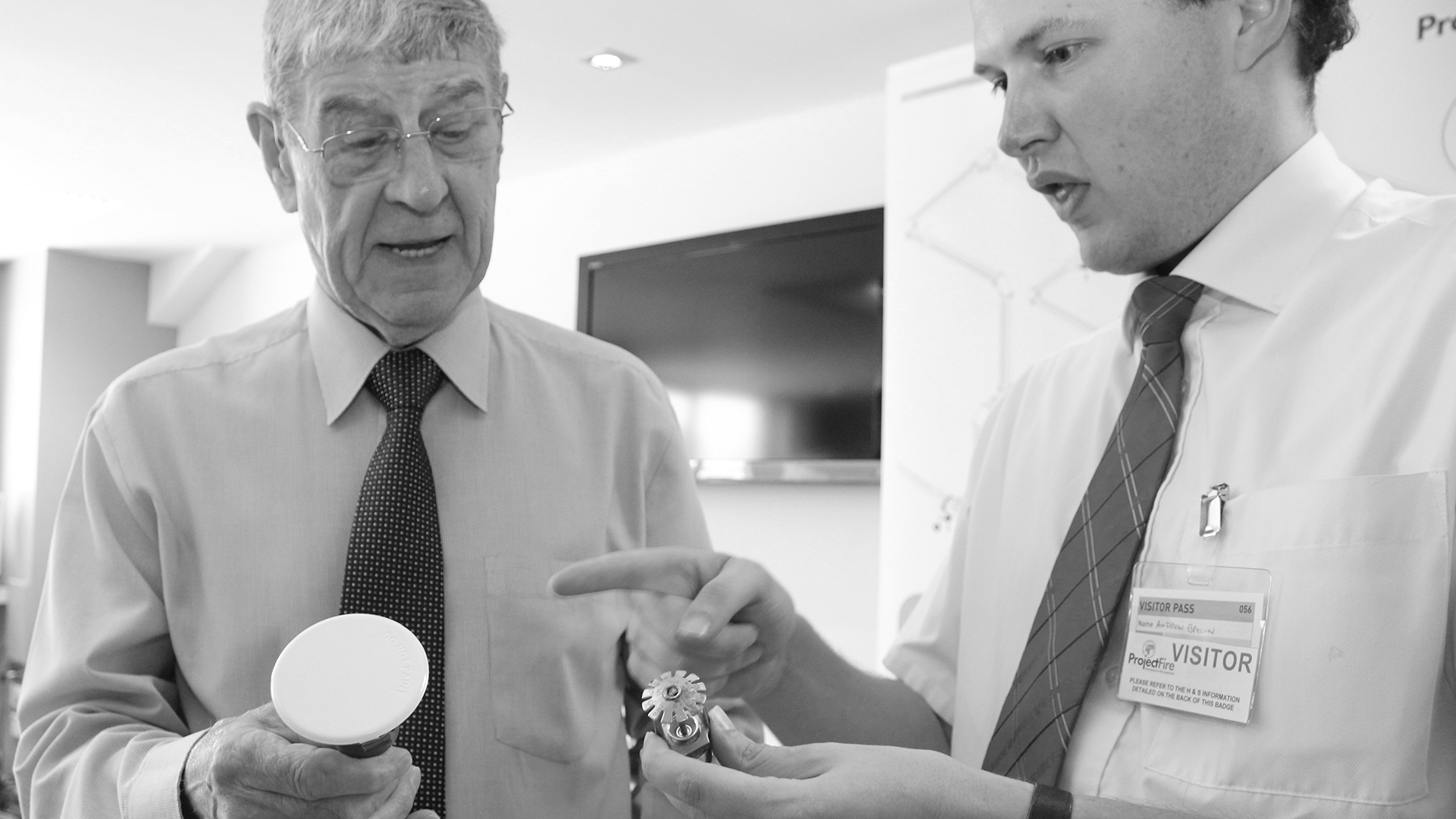
“Since taking over, Luke looks to expand our educational platforms and solidify our global reach.”
During this time Bernard’s son, Stuart Cain continued to push the manufacturing side of the business on a global scale, bringing several new products to market, specifically our second generation Zonecheck Addressable.
Stuart took over as CEO in 2015 and although he still plays an active role within the business the day-to-day operations will now be taken over by Luke Cain.
This move gives way to Luke taking on the role of Managing Director with ambitious plans to drive the company forward following one of our most successful years in the company’s history.
These changes will centre around streamlining our product range and a stronger focus on working more closely with our customers, with initiatives already being implemented to build on these relationships.
Since taking over, Luke looks to expand our educational platforms and solidify our global reach. The Project Fire Academy continues to provide quality training programmes for building consultants and now plans to launch several new courses aimed at sprinkler designers.
Project Fire would also like to take this opportunity to thank all our customers and friends for their continued support through what has been a challenging couple of years, but now we can firmly look forward to building a safer more sustainable future.
With a history dating back to 1976, the late Project Fire founder, Bernard Cain, quickly built up a reputation for quality design and installation, working on several prestigious projects.
At the end of the nineties Bernard embarked on a vigorous R&D product development programme. This culminated in a string of successful, innovative products that focused on water and energy saving and reducing carbon footprint, pairing with his vision of being sustainable in all that we do.
“Since taking over, Luke looks to expand our educational platforms and solidify our global reach.”
During this time Bernard’s son, Stuart Cain continued to push the manufacturing side of the business on a global scale, bringing several new products to market, specifically our second generation Zonecheck Addressable.
Stuart took over as CEO in 2015 and although he still plays an active role within the business the day-to-day operations will now be taken over by Luke Cain.
This move gives way to Luke taking on the role of Managing Director with ambitious plans to drive the company forward following one of our most successful years in the company’s history.
These changes will centre around streamlining our product range and a stronger focus on working more closely with our customers, with initiatives already being implemented to build on these relationships.
Since taking over, Luke looks to expand our educational platforms and solidify our global reach. The Project Fire Academy continues to provide quality training programmes for building consultants and now plans to launch several new courses aimed at sprinkler designers.
Project Fire would also like to take this opportunity to thank all our customers and friends for their continued support through what has been a challenging couple of years, but now we can firmly look forward to building a safer more sustainable future.
MANUAL INTERVETION
Another human related factor and 16% of the failure rate is manual intervention, or when someone gets in the way of letting the fire sprinkler carry out its function. Manual intervention includes building staff or firefighters accidently turning a system off before the sprinklers have operated, for example when a fire isn’t immediately visible. Another cause could be an obstruction which is installed after the sprinkler system, either preventing the sprinkler from detecting heat from the fire or expelled water from reaching the source of the fire.
It is my belief that if trade-offs are implemented when installing a sprinkler system, and what such as less means of escaping, then surely we have a duty to ensure the sprinkler system will operate correctly when they are most needed.
LACK OF MAINTENANCE
Although, sometimes corners are cut when it comes to testing and maintenance, lack of maintenance isn’t always purposeful. More often than not it’s poor organisation or lack of knowledge that is at fault. Lack of maintenance is however still a human error and contributes to 10% of sprinkler failure rates.
Building owners who rely too heavily on sprinkler contractors to inspect and maintain systems properly when it is their duty to be compliant is a maintenance issue we are currently sleep walking into. Building owners currently know far too little about the system they’re ultimately responsible for.
Sprinkler contractors also have a huge task taking on new service contracts, prices are very competitive, and they need to provide a variety of access equipment, risk assessments and method statements. Not forgetting that sites often have insufficient records or any knowledge of where the equipment is and building access restrictions can also play their part. It is common for a building owner to not have ‘as fitted’ drawings, making it impossible to know what equipment the owner has and what the contractor needs to maintain it. Add all of these factors together and it can trigger a domino effect where visit after visit we fail to carry out a compliant test, until it’s too late and fire hits.
NOT FIT FOR PURPOSE
When designing sprinkler systems, one of the most important considerations is determining occupancy classification because it has a huge impact on design and installation. Installing the wrong fire protection system is again human error related and down to knowing what sort of system you have installed and whether it is designed according to the correct risk for your premises. Currently, inappropriate systems contribute to 6% of sprinkler failures.
I strongly believe a sprinkler system must be evaluated throughout a building’s lifecycle. A building and its contents can change over time and with it the risk hazard. For instance, if a landlord or tenant has changed how they stockpile, now house flammable liquids, extended the property or has noticed a reduction in water supply, it will affect whether their sprinkler system is ‘fit for purpose’.
DAMAGED COMPONENTS
And finally, damaged sprinkler components, the only non-human related failure on the list, make up 2% of the 4% failure rate. Components typically become faulty when sprinkler systems are damaged by explosions or by the collapse of ceilings, roofs or the entire building and are very rare chain reactions. Currently 0.08% of all sprinkler activations fail because of damaged components.
“Closed valves are currently the leading cause of sprinkler failures and really shouldn’t be.”
HOW DO WE TACKLE THIS?
Closed valves are currently the leading cause of sprinkler failures and really shouldn’t be. Firstly, it’s clearly stated in regulations BS EN 12845, NFPA 25 and FM that all sprinkler valves require regular testing and inspection for their correct position. If all codes were followed, the majority of sprinkler failures would be averted. Technical Bulletin 203 also states, “stop valves controlling the flow of water to sprinklers shall be operated to ensure that the stop valve and any monitoring are in working order, and securely refastened in the correct mode”. This begs the question – why is testing not being carried out properly or even at all?
I, like imagine many people in the industry, look up whenever I walk into a building to see if there are sprinklers installed. But once I see them, it doesn’t always put my mind at ease because I know too well the reasons why they may not operate correctly. Instead, a reem of questions flood in, including – are there any closed valves? Is something obstructing them? Is the system tested and maintained correctly? I ask myself all these questions because we all must. We rely on these systems to save lives and property so, why aren’t we looking after them properly? For something so critical, we are far too complacent and let too many human errors affect the optimum safety of fire sprinklers.
All sprinkler experts agree that if sprinkler systems were installed at Grenfell tower then it would have saved many lives. But what if the sprinkler system was shut off or poorly maintained? Fire sprinklers should always be considered in any building, but it is also up to us to ensure that human error no longer contributes to loss of life.
Since Grenfell, many of us in the industry have felt that it is our responsibility to try and bring experts together to fight for change, whether its new laws that call for the installation of sprinklers or stricter codes and standards that combat manual intervention and negligence. If legislations conclude that fire sprinkler are the best solution to eliminate the risk of loss of life and property then, surely we as an industry and regulatory bodies have an inherent duty to fulfil that mandate. Because if we fail to do so, it ultimate results in loss of life, the stakes could not be higher
Compared to other industries we are playing catch up and must work hard to innovate and produce ways to reduce unnecessary sprinkler failure and develop sprinkler systems that are smarter, more efficient and automated where possible. I have been personally lobbying for a qualified, independent annual inspection as a mandatory requirement, very much like a vehicle MOT. This is something that VdS have currently adopted in Germany and should be crucial for a life safety system in the UK.
And all of this is achievable. We have the skills and resources in the UK to reduce the human impact on sprinkler failures and make compliance much easier for building owners. Because when fire sprinklers are correctly designed, tested and maintained they are without doubt the most reliable way to protect people, homes and businesses from fire.
Stuart Cain, is the CEO of Project Fire, a manufacturer of innovative fire protection products. Project Fire develop smart solutions that help make compliance easier, more efficient and sustainable.
Coming into effect from April 2022, fire pumps for automatic sprinkler systems are no longer permitted to used red diesel.
One of the changes in this year’s government budget is a reduction in the number of industry sectors which qualify for the use of red diesel (which carries a tax rebate). One of the industries affected by this change is the automatic fire sprinkler industry as red diesel is currently used to power diesel fire pumps.
This change will increase the costs for sprinkler service and maintenance of diesel fire pumps as the pump must be tested by running it every week. We see this change is a backwards move and could possibly encourage building owners to forego these important tests to save money, a sprinkler systems fire pump performs an incredibly important role in protecting life and property.
This change comes into effect from April 2022, the full government reform can be viewed here.
“Using prefabricated, modular units can save over 19% on sprinkler shell & core fit out costs.”
Firepod, designed and manufactured by Project Fire, is the first fully-modular sprinkler zone valve/alarm valve and test assembly in the industry. The product has been specifically created for architects, designers, contractors, building developers and owners to offer a solution for the procurement, installation, operation and whole life cost of sprinkler systems in the built environment.
Project Fire commissioned an in-depth and independent cost study by the Building Services Engineering Cost experts, MEPQS. The report details both the cost, staffing and convenience benefits for Firepod, a pre-fabricated, plug-and-play, compact fire sprinkler solution with integrated smart testing and monitoring facilities. The report is based on a new high-rise construction in Canary Wharf, London.
This a summary of the independent report offering a comprehensive study of modular components assembled in factory conditions as well as a comparative analysis with traditional sprinkler zone valve assemblies. Further analysis of the wider construction benefits is also presented as key points of argument for Firepod’s tangible added-value in the design and procurement phase of sprinkler installations.
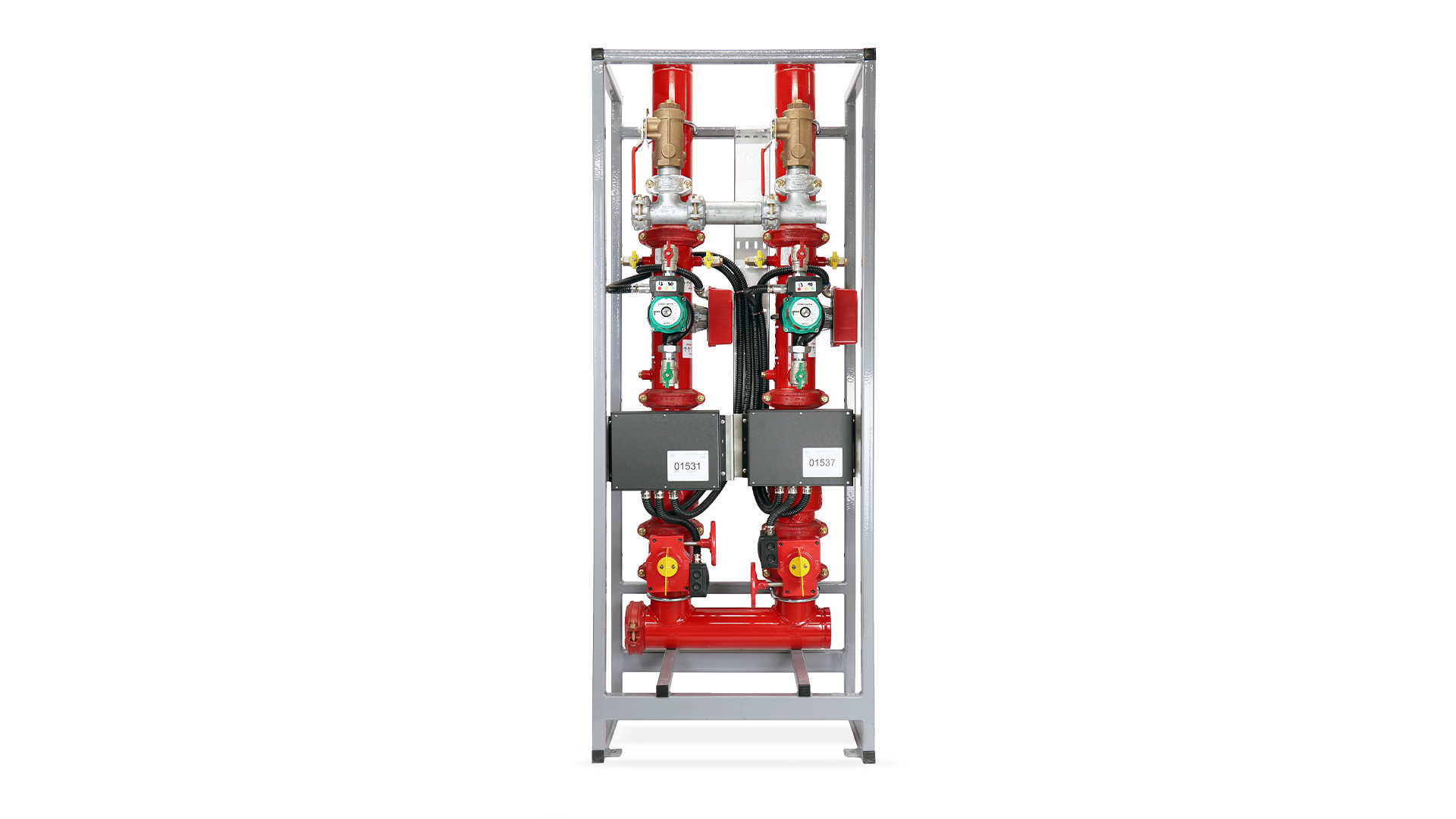
PREFABRICATION
Off-site prefabrication is an established, and proven option for cellular builds for bathrooms, bedrooms or larger scale buildings, e.g. hotels, apartment blocks and the modular implementation of larger single builds, such as Terminal 5 at Heathrow airport. Factory assembly provides consistency, accuracy and the ability to factory test units, which increase assurance and dependability once installed on site. However, our study has found that Firepod’s standardisation and factory-detailed assembly means the Firepod is able to offer a range of benefits from design, procurement to assembly and final commissioning. Furthermore, the composite package is offered at a discount to the traditional site installation of materials, which is calculated using defined cost modelling methods, and so the collective intangible benefits provide a compelling case for its specification.
ANALYSIS OF COST (ON-SITE VS FIREPOD)
The original standard installation was created from its original design to ensure the quality and integrity normally expected within the context of a competitive tender process, extracted and illustrated in figure (i). This assures the expected integrity for normalised feedback from more than one site installation, given that the project sample used in this cost model originates from a Firepod installation, which was carried out by a sprinkler contractor for the first time.
The actual site feedback of Firepod installation costs were also aggregated against the delivery, installation and commissioning costs, estimated by contractors and based on the design details included with a Firepod.
“We have saved around 70-80% of installation time by using the Firepods on this project. They get delivered to site and are in position, ready to be connected within a couple of hours. As a project manager, using Firepods certainly takes away a lot of the stress and hassle usually associated with high-rise projects.”
Product selection, particularly when using multiple sources, provided another area of risk to the assimilation of costs on a fair and equal basis. To mitigate this, the original design engineers were provided with details of components in order to validate the comparison. The cost model contrasts a working example installing 3no. zones to each floor of either (figure i) a standard component site installation or; the prefabricated modular Firepod installation.
SPACE SAVINGS AND INCREASED RENTAL YIELDS
The parameters in table (i) (see full report for details) show the additional yield from space that the Firepod saves. The amount of space the Firepod saves is equal to the gross additional rent of £166,827.51.
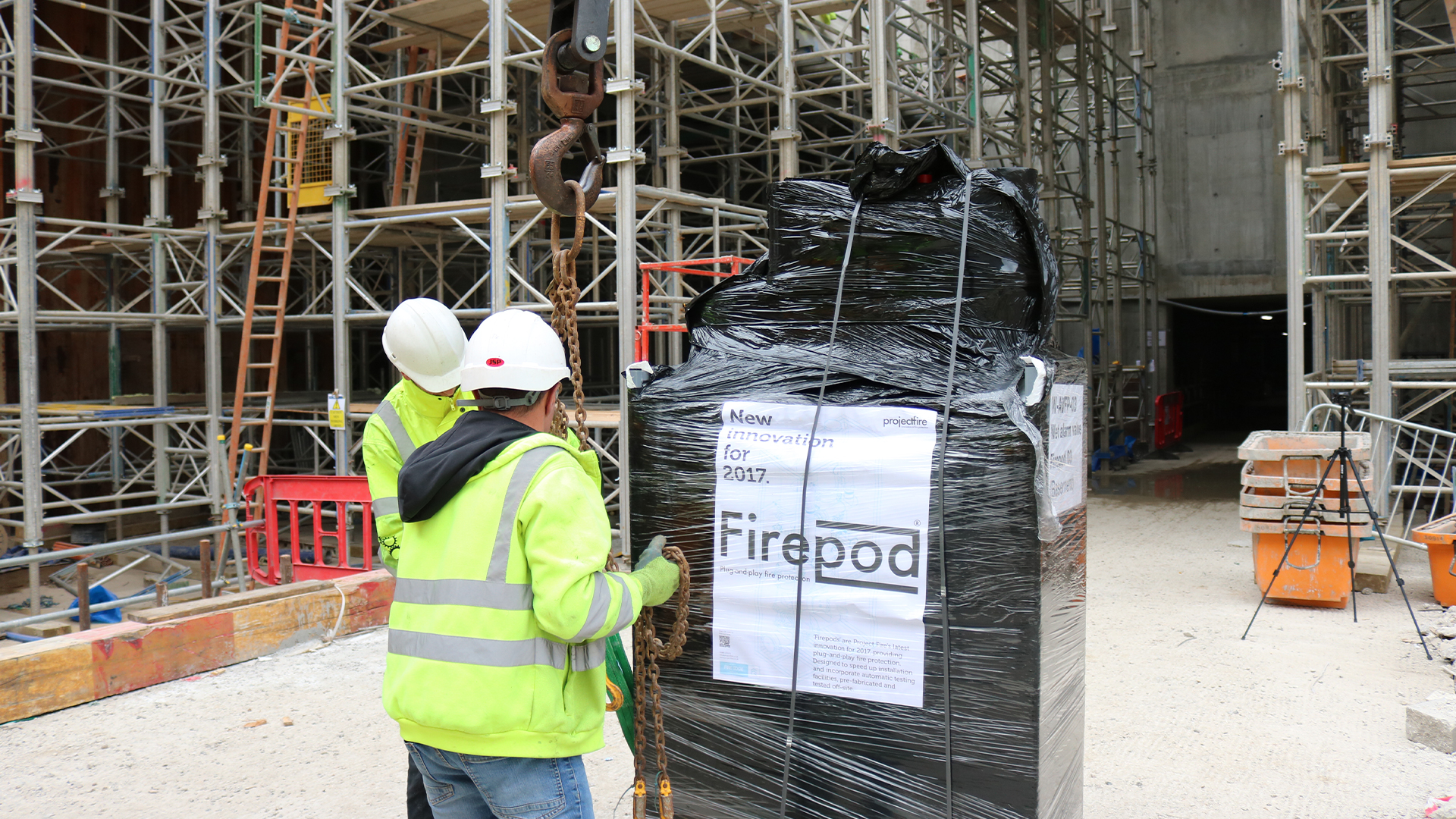
“The commercial advantage of specifying Firepods pays for the entire installation within its life-cycle even without taking all the Zonecheck testing benefits into account.”
TOTAL POTENTIAL
The requirements for builder work and/or recommendations for specific projects by Building Control and regulatory bodies, who provide fire protection advice, cannot be factored in as predictable elements for cost. The data above does not empirically define the wider benefits of specifying Firepods.
Cost feedback from previous and similar installations was obtained from a range of sources including contractors, consultants, component suppliers as well as historical project cost data. This was obtained without an identical parallel block, which was constructed using the standard zone valve installation.
The report has found that the cost savings a specified Firepod provides means that the entire installation fee will be paid back in full within its lifecycle, without taking into account any Zonecheck testing and cost benefits.
During the design phase, a pre-modelled Firepod can be dropped into a Level 2 BIM model as a preconfigured item and will help reduce time spent on CAD preparing detailed construction designs. In addition, Firepod will lower the risk of design failure, due to the fact that sprinklers are commonly a design and build package. Reduction in site wastage, as well as the reduction in man-hours and management hours required on site, contribute to reductions in carbon footprint and BREEAM points when contrasted with multiple site deliveries for individual components.
This report finds that Firepod is a well-suited solution to control project schedules and budgets while increasing quality and reducing environmental impact. The Firepod’s off-site construction is especially effective when employed to shorten building cycles, on repetitious or unique projects, and with teams that are prepared to embrace the challenges and opportunities associated with its delivery.
“Traditionally, testing can prove difficult, is labour intensive, and wastes large amounts of water and energy in the process. Innovative fire safety product manufacturer Project Fire Products Ltd has changed all of that with its Zonecheck system, which now includes a compact, low-cost residential version.”
Automatic fire sprinkler systems require routine testing to prove that the system remains ‘fit for purpose’. Traditionally, testing can prove difficult, is labour intensive, and wastes large amounts of water and energy in the process. Innovative fire safety product manufacturer Project Fire Products Ltd has changed all of that with its Zonecheck system, which now includes a compact, low-cost residential version. As a manufacturer that prides itself on quality and reliability and to assure customers that this newly developed solution would work as designed under all possible configurations, they called in the help of accredited testing, inspection and certification body Warringtonfire.
In fire sprinkler systems, the fire alarm is triggered by a piece of equipment known as a flow-switch. This is usually a hinged paddle inside the sprinkler system pipework. When the sprinkler head activates, water flows. The force of the moving water pushes the paddle, activating a switch that then sends an electrical signal to activate the alarm. Without it, occupants (who, in residential buildings, might be asleep) would not necessarily know to evacuate, and the delayed response might mean that the fire and rescue service loses valuable time.
Clearly, these flow-switches are critical to the functioning of the system. However, because they rely on mechanical operation, they are vulnerable to problems arising through wear and tear, corrosion, damage inflicted from the outside, or because of some obstruction inside the pipe. Confirming their ability to work cannot be left until an emergency: they must be tested regularly before then. Indeed, in blocks of flats or student accommodation or care homes, for example, regular testing is mandatory in England and Wales under the Regulatory Reform (Fire Safety Order) and equivalent legislation in Scotland and Northern Ireland.
The problem is that in traditional systems, the testing process is time-consuming, messy, disruptive, costly, and wastes large amounts of water. To simulate the sprinkler head activating, engineers open a downstream valve to let water flow, usually to a purpose-built drain or through a hose leading to a convenient toilet or water container, for example, to confirm that the flow-switch is operational. Since sprinkler systems usually have one flow-switch per zone (which could be a flat, a storey, or common area in an apartment block, for example) then the engineers might find themselves having to organise dozens of tests in a single building at gross inconvenience to tenants, considerable time and effort to themselves, and all at significant expense to the landlords.
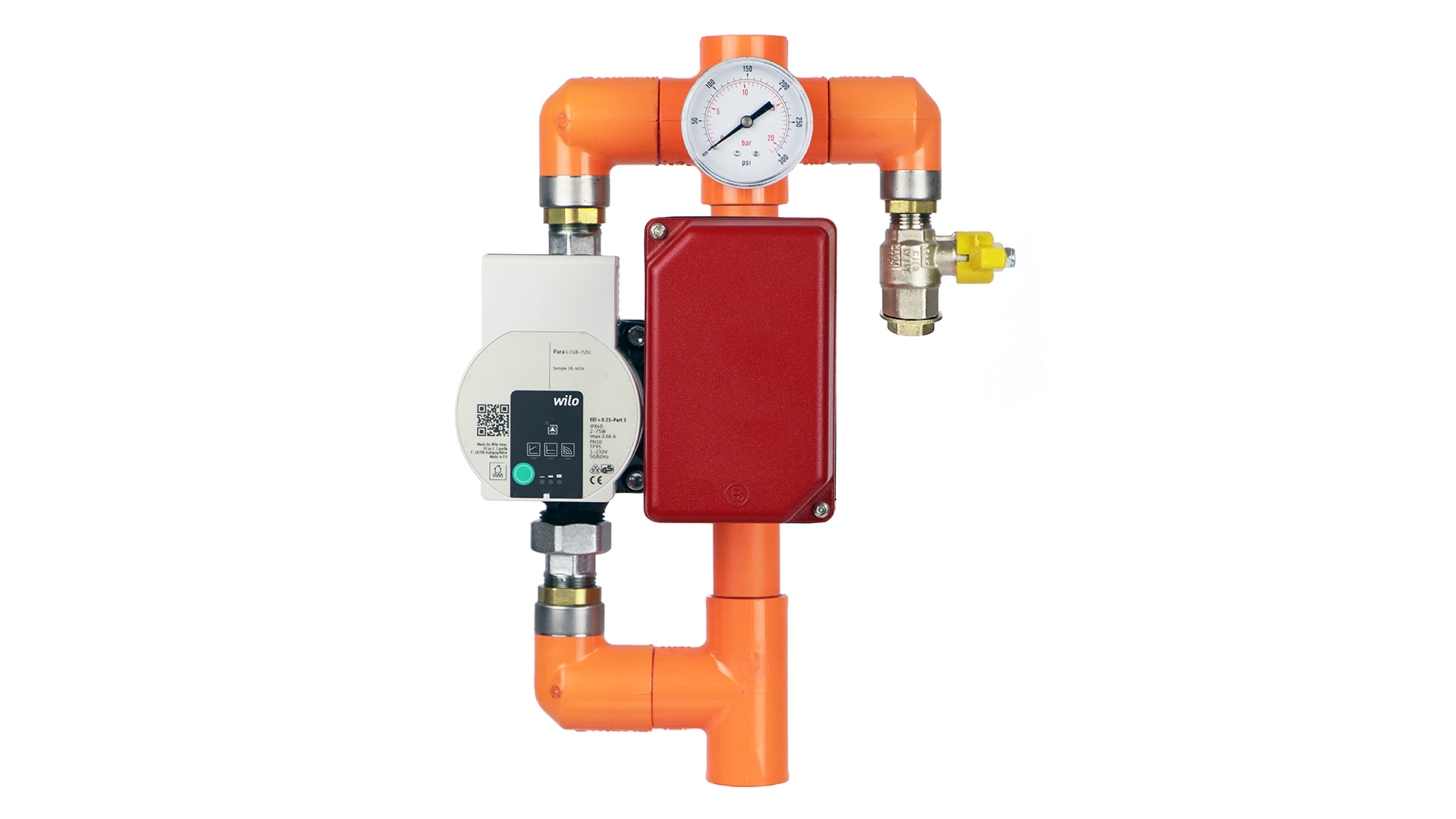
The Zonecheck Residential system allows flow-switches to be tested without wasting any water. The test signal starts the small pump that sends water already in the system around a loop of CPVC pipe past the flow-switch, simulating the activation of a sprinkler head.
On top of that, each test wastes up to 100 litres of drinking water. Multiply that by the number of flow-switches and by the number of tests needed per year to satisfy the fire risk assessment, and the scale of the waste quickly becomes apparent. At a time of climate change emergency and environmental resource depletion, this profligacy is unwarranted.
At least, it seemed that way to Project Fire, whose family of products collectively called Zonecheck already solved precisely this problem for sprinkler systems designed for commercial properties where there has traditionally been a much keener interest in fire sprinkler systems than in the residential sector.
Spurred by the consequences of the tragic Grenfell Tower fire, that difference disappeared. Project Fire realised that even if the regulations for residential properties didn’t change in England (as they had already done in Wales and, much later, in Scotland), insurers would adjust their risk factors to incentivise the installation of fire sprinklers.
David Disbury is in charge of developing new product lines at Project Fire. He was in no doubt: “The national mood had changed. People now wanted to install sprinklers in new residential properties. If they were going to benefit from our technology, we had to respond.”
Project Fire’s existing Zonecheck solution for commercial properties consists of a closed loop of galvanised steel pipe around the flow-switch that, with a small pump, makes it possible to simulate a sprinkler head activation without wasting a single drop of water. Needless to say, its various component parts are, where standards exist, third-party certified to make code compliance easy and to give consultants the quality assurance they need to specify them with confidence.
However, it was not designed for the residential market, where profit margins are tighter and where gross internal area is at a premium. Project Fire set about ways to make the existing product more compact and affordable, quickly developing a new range – Zonecheck Residential.
The new range comprises two compact pipe configurations – void and riser – with several options, including a variety of pipe diameters, two pipe materials – CPVC and galvanised steel, and two testing modes – mini-switch and addressable. As the names suggest, the configurations anticipate installation in residential risers or ceiling voids. By cleverly narrowing or flattening the ensemble of components, Project Fire was able to meet the residential sector’s particular market need to maximise space.
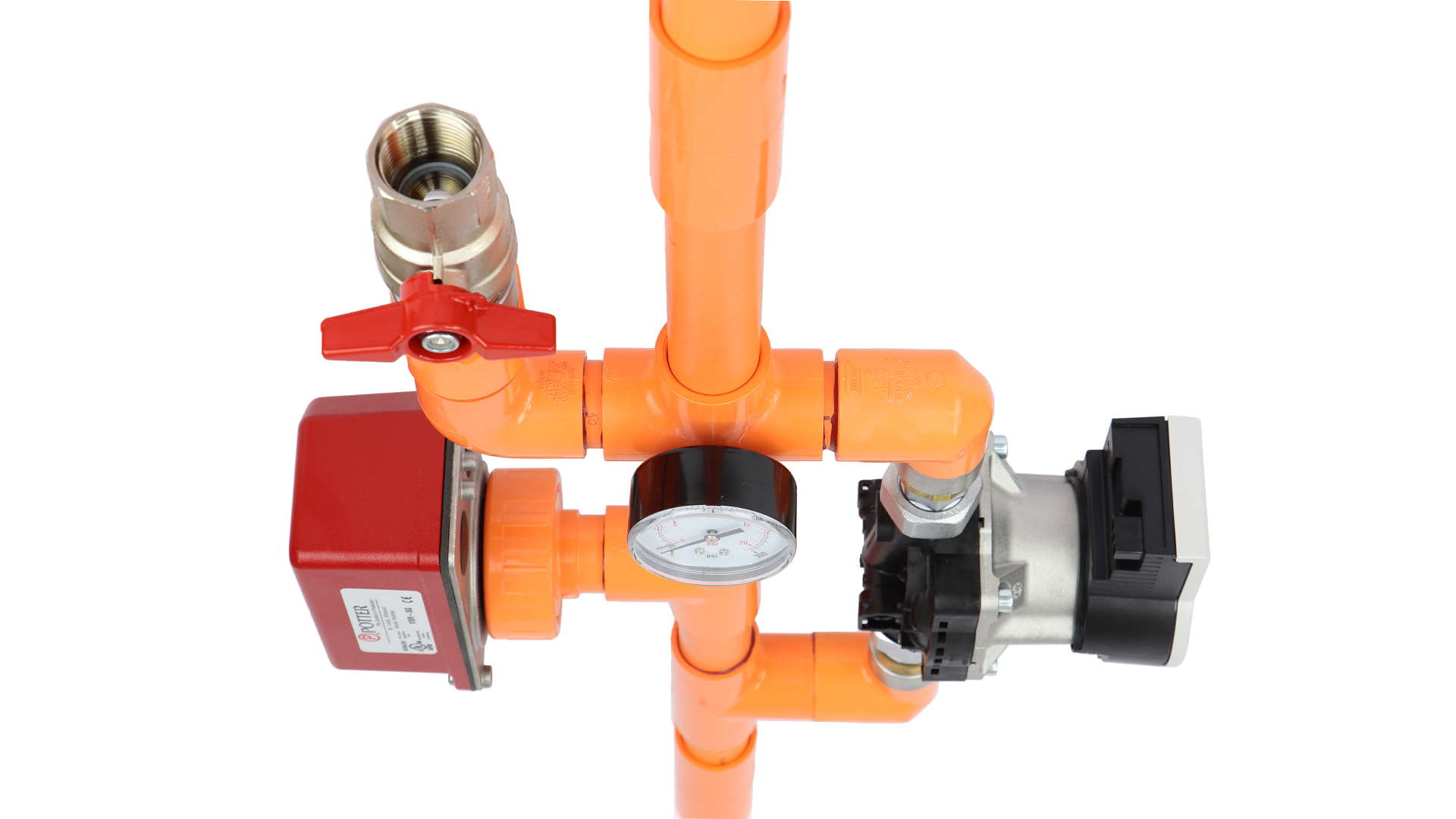
The slimline ‘void’ configuration of Zonecheck Residential is, as the name suggests, designed for very shallow ceiling voids in new build residential blocks.
All versions of Zonecheck Residential save water, already a huge advantage. However, the full facilities management benefits come with the addressable technology. Integrating seamlessly with fire alarm systems or building management systems, allowing flow-switches to be monitored and tested automatically. As well as proving compliance with fire codes, the system saves on ongoing maintenance costs and mitigates the risk that the flow-switches might have stopped working. “The beauty is that you no longer have to send engineers around the building to carryout flow-switch testing, interrupting tenants and wasting water. It performs silently and safely in the background, and saves you money,” says Disbury.
Without human intervention, the addressable version runs tests monthly, logs the test results, pinpoints faulty flow-switches, and notifies maintenance crews. Disbury again: “It has double-point failure resilience and silences the alarm system during the test. Overall, automating the process improves the speed and efficiency of regulatory compliance.”
With working prototypes developed, Project Fire knew that the market and its insurers would look for third-party verification that the system would work as designed. They did not hesitate to approach Warringtonfire for help. As a highly respected, globally recognized accredited testing and certification body with expertise in fire safety, they were the natural choice.
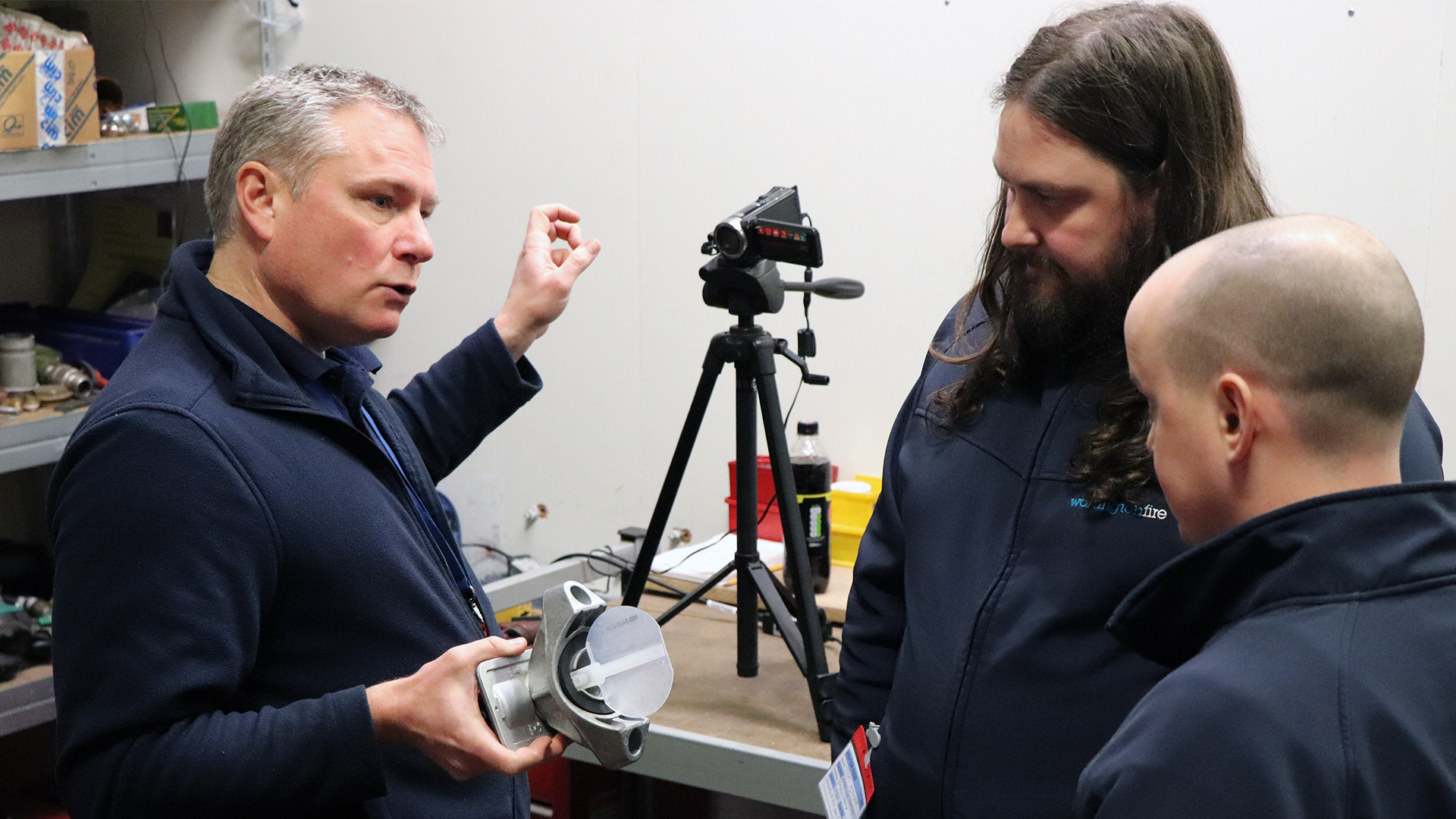
Engineers from Warringtonfire oversaw the bespoke testing of the whole Zonecheck Residential product range, providing Project Fire with third-party ‘ad hoc’ product test verification.
Collaborating on the best way forward in the absence of any formal test standard, the two parties swiftly agreed a schedule of three tests. The first was a hydraulic test to demonstrate that all configurations could withstand 10 bars of pressure. They could, and in fact Project Fire has successfully tested it up to 28 bar, although this has not been independently verified. The second was to check that the flow-switch test functioned in all configurations and for all conditions. It did. The third and final test checked against false alarms. Once again, all configurations were within acceptable tolerances.
The product range launched in June 2019 and is already attracting interest around the UK, kicking off with a large order for a 110-unit newbuild residental block in central London. As Disbury says, “The route to market has been remarkably smooth, helped in no small measure by the technical support we received from Warringtonfire”.
“Not just another supplier.”
At Project Fire we don’t see ourselves as just another supplier. We want to work closely with our customers, understand your business challenges and how we can help streamline processes, ordering and do everything we can to make your life easier. We pride ourselves on our after sales service and our design team is here to support your project to the end, from remote assistance to on-site technical support.
Because of the essential role our products perform, regular routine maintenance is essential, and our warranties make a clear statement on the quality and longevity of our products.
AFTER SALES SERVICES INCLUDE
- Dedicated technical support
- Help with technical drawings
- Project support
- On-site commissioning support
- Manufacturer’s updates
- Industry training
Our 5 Year Warranty
REPLACEMENT PARTS
Full warranty includes protection for materials and manufacturing defects.
TECHNICAL ASSISTANCE
Our premier account provides dedicated technical assistance and trouble shooting.
PROJECT SUPPORT
To help our clients meet the requirements of their customers and projects we are able to offer extended warranties.
EASY RETURNS
Project fire operate a no quibble repair or returns procedure, terms & conditions apply.
WE ARE HERE TO HELP
We pride ourselves on our after sales service.
If you have a site issue or problem with your order and want to contact a member of our team, please fill out the form or send an email to info@projectfire.co.uk or call us on +44 (0)1889 271271
With a history dating back to 1976, the late Project Fire founder, Bernard Cain, quickly built up a reputation for quality design and installation, working on several prestigious projects.
At the end of the nineties Bernard embarked on a vigorous R&D product development programme. This culminated in a string of successful, innovative products that focused on water and energy saving and reducing carbon footprint, pairing with his vision of being sustainable in all that we do.
“Since taking over, Luke looks to expand our educational platforms and solidify our global reach.”
During this time Bernard’s son, Stuart Cain continued to push the manufacturing side of the business on a global scale, bringing several new products to market, specifically our second generation Zonecheck Addressable.
Stuart took over as CEO in 2015 and although he still plays an active role within the business the day-to-day operations will now be taken over by Luke Cain.
This move gives way to Luke taking on the role of Managing Director with ambitious plans to drive the company forward following one of our most successful years in the company’s history.
These changes will centre around streamlining our product range and a stronger focus on working more closely with our customers, with initiatives already being implemented to build on these relationships.
Since taking over, Luke looks to expand our educational platforms and solidify our global reach. The Project Fire Academy continues to provide quality training programmes for building consultants and now plans to launch several new courses aimed at sprinkler designers.
Project Fire would also like to take this opportunity to thank all our customers and friends for their continued support through what has been a challenging couple of years, but now we can firmly look forward to building a safer more sustainable future.
There are currently several major residential redevelopment projects ongoing across London including, Battersea Power Station, Wembley Park, Paddington Basin and Gasholders, all of which will have fire sprinkler protection installed.
Industry organisations join forces for full revision of BS 9251
There is already an existing EU standard on the design, installation and maintenance of residential sprinkler systems (BS EN 16925:2018) which was principally written for Europe and for countries that did not already have a standard. In the UK, the industry was using BS EN 16925:2018 for scenarios that BS 9251:2014 did not cover. Consequently, BAFSA, BRE, the Fire and Rescue Service as well as other industry organisations worked together to release an updated version of the BS 9251 in June 2021 with stricter regulations and guidance for residential sprinklers systems. The changes mark a historic move for keeping people safe from fire in high rise residential buildings and are welcomed by the industry already having a positive impact on how future and current residential and domestic high-rise properties will be protected from fire in England.
What these changes mean for the fire protection landscape in the UK is; all new residential buildings in Wales and Scotland will be sprinkler protected. In England, all new residential buildings over 11m must be sprinkler protected.
Buildings over 18m in height now come under the newly created category 4. The major change for this category is the requirement of an enhanced water supply which is now quite similar to a commercial life safety system, typically requiring two half capacity tanks and two independent pump sets. The duration of supply has increased from 30mins to 60mins which doubles tank size.
Other noteworthy changes to the standard include:
-
- The introduction of monitored isolation valves
- Formalisation of shadow areas (obstructions)
- Additional detail regarding permitted exceptions for sprinkler coverage
- More detail on the use of CPVC pipe and fittings
- More requirements for administration components such as plans, labels, and manuals
Another major change to the standard is the ability to protect small non-residential areas, such as bin stores, retail and office areas under the same standard (often with increased area of operation and discharge density). This is a welcome addition to many as it formalises this practice and sets clear limitations to follow.
The maintenance routine has also seen some welcome improvements, for example, the requirement for a long-term inspection and overall after 25 years again, bringing the standard more in line with its commercial counterpart.
Conclusion
As the public becomes more and more aware of how efficiently sprinkler systems protect life in our residential high rises across the country, more and more is being done in the industry to ensure the right guidance and regulations are available from design and installation to maintenance of sprinkler systems. BS9251:2021 is the latest update to be released in a chain of measures since Grenfell Tower to ensure a tragedy on such a scale never happens again.
Thanks to industry wide collaboration, BS9251:2021 changes provide up to date and consistent guidelines for residential high-rise sprinkler systems.
With a history dating back to 1976, the late Project Fire founder, Bernard Cain, quickly built up a reputation for quality design and installation, working on several prestigious projects.
At the end of the nineties Bernard embarked on a vigorous R&D product development programme. This culminated in a string of successful, innovative products that focused on water and energy saving and reducing carbon footprint, pairing with his vision of being sustainable in all that we do.
“Since taking over, Luke looks to expand our educational platforms and solidify our global reach.”
During this time Bernard’s son, Stuart Cain continued to push the manufacturing side of the business on a global scale, bringing several new products to market, specifically our second generation Zonecheck Addressable.
Stuart took over as CEO in 2015 and although he still plays an active role within the business the day-to-day operations will now be taken over by Luke Cain.
This move gives way to Luke taking on the role of Managing Director with ambitious plans to drive the company forward following one of our most successful years in the company’s history.
These changes will centre around streamlining our product range and a stronger focus on working more closely with our customers, with initiatives already being implemented to build on these relationships.
Since taking over, Luke looks to expand our educational platforms and solidify our global reach. The Project Fire Academy continues to provide quality training programmes for building consultants and now plans to launch several new courses aimed at sprinkler designers.
Project Fire would also like to take this opportunity to thank all our customers and friends for their continued support through what has been a challenging couple of years, but now we can firmly look forward to building a safer more sustainable future.
There are currently several major residential redevelopment projects ongoing across London including, Battersea Power Station, Wembley Park, Paddington Basin and Gasholders, all of which will have fire sprinkler protection installed.
Industry organisations join forces for full revision of BS 9251
There is already an existing EU standard on the design, installation and maintenance of residential sprinkler systems (BS EN 16925:2018) which was principally written for Europe and for countries that did not already have a standard. In the UK, the industry was using BS EN 16925:2018 for scenarios that BS 9251:2014 did not cover. Consequently, BAFSA, BRE, the Fire and Rescue Service as well as other industry organisations worked together to release an updated version of the BS 9251 in June 2021 with stricter regulations and guidance for residential sprinklers systems. The changes mark a historic move for keeping people safe from fire in high rise residential buildings and are welcomed by the industry already having a positive impact on how future and current residential and domestic high-rise properties will be protected from fire in England.
What these changes mean for the fire protection landscape in the UK is; all new residential buildings in Wales and Scotland will be sprinkler protected. In England, all new residential buildings over 11m must be sprinkler protected.
Buildings over 18m in height now come under the newly created category 4. The major change for this category is the requirement of an enhanced water supply which is now quite similar to a commercial life safety system, typically requiring two half capacity tanks and two independent pump sets. The duration of supply has increased from 30mins to 60mins which doubles tank size.
Other noteworthy changes to the standard include:
-
- The introduction of monitored isolation valves
- Formalisation of shadow areas (obstructions)
- Additional detail regarding permitted exceptions for sprinkler coverage
- More detail on the use of CPVC pipe and fittings
- More requirements for administration components such as plans, labels, and manuals
Another major change to the standard is the ability to protect small non-residential areas, such as bin stores, retail and office areas under the same standard (often with increased area of operation and discharge density). This is a welcome addition to many as it formalises this practice and sets clear limitations to follow.
The maintenance routine has also seen some welcome improvements, for example, the requirement for a long-term inspection and overall after 25 years again, bringing the standard more in line with its commercial counterpart.
Conclusion
As the public becomes more and more aware of how efficiently sprinkler systems protect life in our residential high rises across the country, more and more is being done in the industry to ensure the right guidance and regulations are available from design and installation to maintenance of sprinkler systems. BS9251:2021 is the latest update to be released in a chain of measures since Grenfell Tower to ensure a tragedy on such a scale never happens again.
Thanks to industry wide collaboration, BS9251:2021 changes provide up to date and consistent guidelines for residential high-rise sprinkler systems.